Home Improvement Lead Acquisition Costs Keep Climbing — Customer Database Leads Deliver a 15.6x ROI
2026 Contractor Marketing Annual Report
Letter to the Home Improvement Industry
Dear Contractor,
Winning a new customer is getting more expensive, and contractors are competing harder for the same homeowner attention. Meta ad pricing is up. Local Services Ads cost more. Google clicks come with a bigger price tag. More advertisers are bidding in search. The same marketing dollar simply doesn’t go as far as it used to.
At the same time, your reputation has to do more work. Homeowners are checking reviews and other online signals before they ever call, and search engines and AI tools are using many of those same signals when deciding which contractors to surface and recommend.
That makes the customers and leads you’ve already paid to acquire more valuable than ever.
Past customers can come back or refer. Unsold leads can reengage.
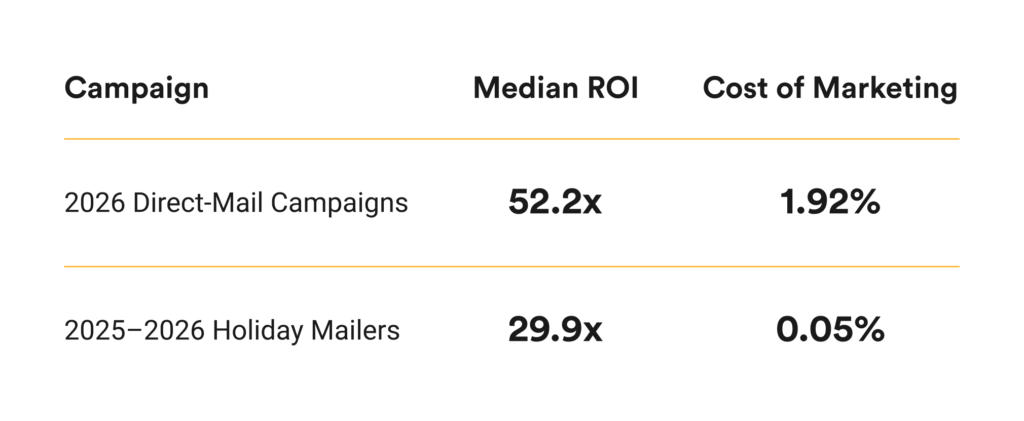
Repeat and referral leads close at significantly higher rates than paid leads. Among gFour clients active for 10 months or more, the median ROI on customer marketing is 15.6x.
I don’t believe the answer is to stop buying new leads. You’ll always need them. But as those leads get more expensive, getting more value from every one you acquire, even after the first sale, fortifies your business against rising costs for new lead acquisitions.
That’s what this report is about: what’s changing in the market, how homeowners are choosing contractors, and how to get more from every lead and customer you acquire.
If this report gives you a new perspective on where your marketing dollars can work hardest, it’s done its job.
Sincerely,
Felipe Ros President, gFour Marketing
In this report:
Why Getting New Customers Costs More Than It Used To
Visibility & Homeowner Behavior: How to Grow Your Digital Reputation
The Highest-Return Channel You Already Have: Your Proprietary Leads
The gFour System in Practice: Process & Payoff
How to Apply This: Your Action Plan
Thank-you to our clients for sharing their stories.
Why Getting New Customers Costs More Than It Used To
Market Size and Growth
The home improvement market remains sizeable, but the environment for landing new jobs is getting more challenging.2,3,4
Industry projections anticipate continued growth at modest rates.
Demand is Still There
Homeowners are still investing heavily in their homes.4
But continued demand doesn’t necessarily mean easy growth. Only 55% of contractors expect the market to grow over the next 12 months, and broader forecasts point to decelerating growth.
The market is still large, but the rising tide is getting weaker.
U.S. Home Improvement Market
Adapted from Grand View Research4
$518B–$613.8B
Projected 2026 home improvement market, with a 3.0% compound annual growth rate (CAGR) from 2026 to 20332,4
65%
of homeowners completed a home improvement project in the past year5
$21,000
average homeowner spending in 2025—the number of homeowner projects declined, but spend per project grew over 12 months6
Contractors typically generate leads from two broad categories:
Competitive
These are the marketplace leads you pay for.
Google Ads
Local Services Ads
Meta
Lead Aggregators
Proprietary
These are the leads that are already in your CRM, the ones you control.
Customer Database
Unsold Leads
Customer Acquisition
How Contractors Land Customers & The Cost Crisis
Homeowner demand is still there, but converting that demand into new jobs is getting more challenging as dynamics shift.
Typical marketing playbooks focus the majority, or all, of the budget on those competitive leads. Meanwhile, the customers and prospects you’ve already paid to acquire often get a fraction of the attention.
And today, the cost of generating net new leads is skyrocketing:
~40%
Local Services Ads costs since 2023, as adoption grew from roughly 28% to 70% of contractors8
12%
Meta ad prices, YoY — for two consecutive quarters7
6.11%
Google cost-per-click for home improvement leads9
That pressure is showing up in contractor accounts, too. In gFour’s network, one client saw paid-digital cost per conversion reach $577 in May 2026, while multiple contractors reported broader increases in cost per lead over the same period.1
Search Is Getting More Competitive, Too
~35% YoY
Advertisers bidding in search auctions22
54%
Paid click-through rates (CTR) on queries where an AI overview appears (fell from 21.27% to 9.87%)10
THE RESULT
Contractors are competing with more advertisers for a smaller share of available clicks.
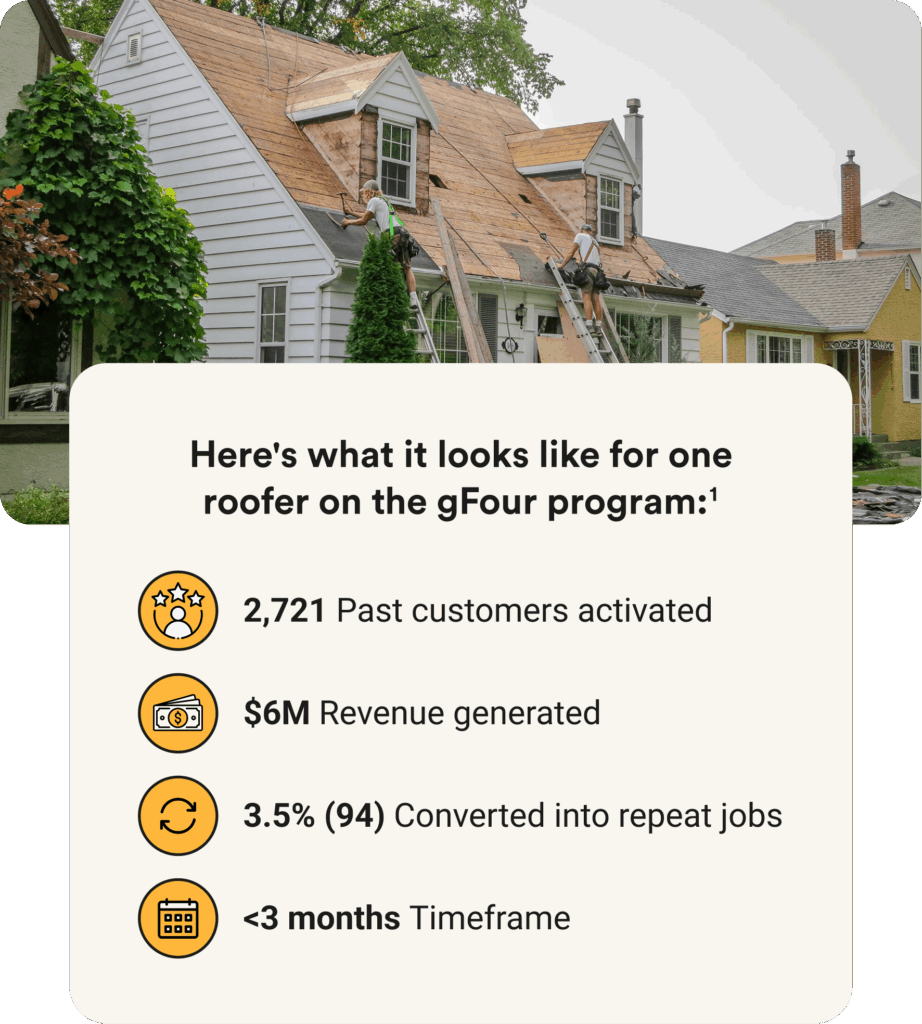
$5.9M from Existing Database
Anissa Westfall
Westfall Roofing
More Competition For New Customers Means Higher Acquisition Costs
That pressure is already influencing channel decisions: a qualitative review of gFour client calls from Q2–Q3 2026 found multiple contractors cutting ties with third-party lead aggregators over concerns about declining lead quality.1
Supply & Demand Model
Modest market growth + More contractors competing for that demand = Less available attention in some digital searches
What This Means for You
New-lead acquisition isn’t going away. But as paid channels become more competitive, the economics of relying entirely on the next new lead become harder to ignore.
Visibility & Homeowner Behavior
How to Grow Your Digital Reputation
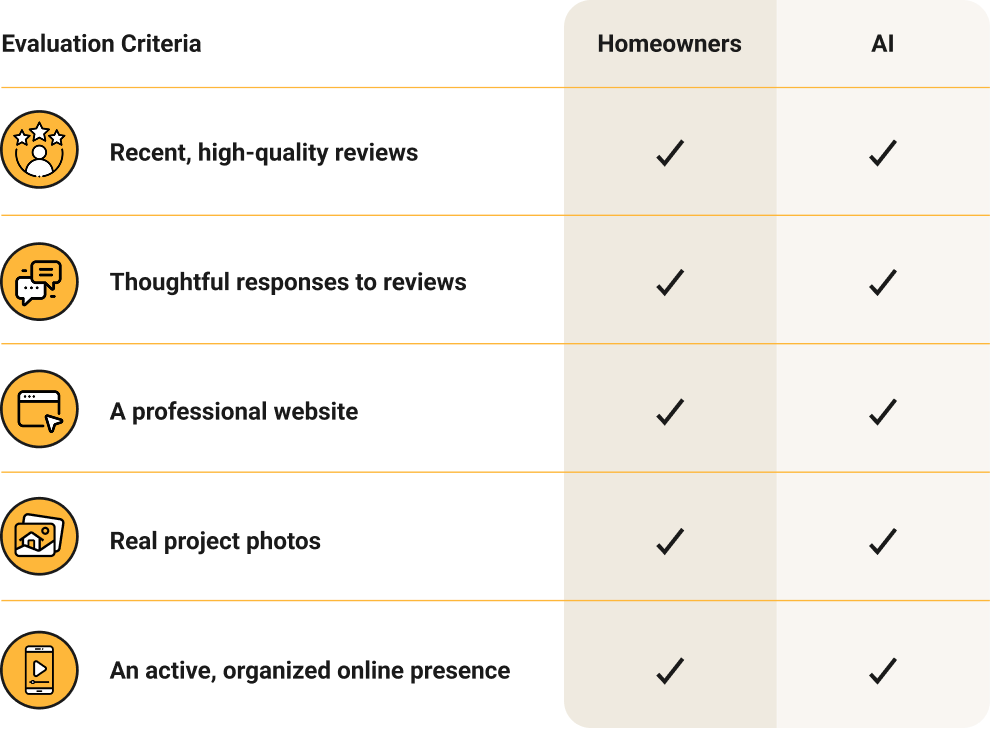
Reviews are one of the most critical discovery tools a contractor has in their kit. Not only are they a trust signal for homeowners, but Google and AI chatbots like ChatGPT and Claude heavily rely on reviews when making recommendations.
Let’s break down how homeowners find a contractor and what matters in the buyer journey.
How Homeowners Choose A Contractor
Homeowners may discover contractors in many places, but when it comes to trust, referrals still lead.
Homeowners prefer word-of-mouth recommendations.
61%
say they trust word-of-mouth recommendations most; it influences 74% of contractor selections11,20
ONLY
14%
say they trust third-party lead-generation platforms11
~30%
report a negative experience with a contractor found through a third-party lead-generation platform11
Homeowners trust referrals more than almost any other source — but referrals aren’t always the easiest path available to them.
That means contractors need the trust they’ve earned from past customers to show up in the places homeowners go to find a contractor: search engines, reviews, social media, and increasingly, AI.
SEO, AEO, & Paid Media
Digital Channels Drive Discovery
Although most consumers trust referrals more, discovery skews toward digital channels. Homeowners often discover contractors through Google, an ad, or social media.12
Discovery Skews Paid and Passive, Not Referral-Driven
Data Source: Modernize Homeowner Insights 202412
As AI Shapes Discovery, Reputation Matters Even More
Getting found and getting chosen are two different challenges.
Discovery gets you considered. Trust helps get you chosen.
Homeowners may find you through Google, an ad, social media, or an AI-generated recommendation. But after the initial discovery, they still need reasons to believe you’re credible.
That’s where your digital reputation becomes critical.
Use of ChatGPT and other AI tools for local recommendations.
6%
in 2025
0%
in 2026
Data Source: BrightLocal21
Digital Trust Signals & the Trust-in-Reviews Paradox
The common theme across home improvement lead-gen is that reputation matters.
Homeowners are evaluating you before they ever call — and AI is using the same signals to make recommendations.
That makes your online reputation the single highest-leverage thing you can influence before a lead ever comes in.
Before making contact, homeowners are already looking for signs that a contractor is credible, active, and trustworthy13
The numbers stack up in one direction: Reviews clearly still move homeowner decisions.
91%
Say online reviews are important when choosing a contractor14
85%
Wouldn’t use a business with negative reviews from the past 12 months15
82%
Actively seek out negative reviews before hiring16
Review activity is rising, too.
+30.7%
Industry-wide review volume in 202515
+24.5%
Home Services review volume, 2024–202515
75.5%
Industry-wide review response rate15
here's the paradox
It’s not just a numbers game.
Homeowners still rely heavily on reviews, but they’re reading them with more skepticism. Trust in ratings alone is declining. Homeowners and AI alike are looking for more human-like review signals.
That puts more weight on the signals behind the star rating: recency, details, authenticity, and thoughtful responses are increasingly important.
The Value of A Google Review
Rebecca Scott
NG Windows
As the market continues to evolve and homeowner behaviors change with it, one common theme has emerged:
Building trust with homeowners and customers is critical. That trust hinges on maintaining relationships with your customers.
Trust in Online Reviews has dropped
90%
of consumers trust written review text more than a star rating alone.17
88%
are more likely to overlook a negative review when the business responds.17
+40% YoY
240 million+ policy-violating Google reviews were removed in 2024.15
What This Means for You
A high-star rating alone isn’t enough.
To turn visibility into trust, homeowners need proof behind the rating: recent customer experiences, detailed feedback, and genuine responses from the business.
The goal isn’t just to get discovered. It’s to make sure that when homeowners find you, they have enough credible proof to choose you.
The Highest-Return Channel You Already Have: Your Customer Database
Protecting Your Business From Changing Market Dynamics
Relying too heavily on competitive channels generally works to generate new business, but it’s largely out of your control. Google can change how much visibility you get. Meta can raise prices. Lead aggregators can change how leads are priced, distributed, or qualified. Any one of those changes can affect your pipeline fast.
Using those channels is inevitable for any company in the current market. The risk is depending on them for too much of your growth.
Proprietary leads — your customer database and the unsold leads in your CRM — give you another place to grow through repeat business, referrals, or rehashing the leads that never turned into jobs. You’ve already paid to acquire those relationships. The opportunity is to get more from them instead of always starting over with the next new lead.
ROI on Previous Customers
Tucker Olen
O’Lyn Roofing
Beyond lower costs, proprietary leads close at dramatically better rates than new, cold leads.
Repeat leads close at
60-80%
Referral leads close at
40-50%
Cold leads close at
27-30%
Anecdotal evidence reveals that proprietary leads also have a lower overall customer acquisition cost.1
Common Barriers to Generating Repeat & Referral Business
~85% of contractors
who signed up for the gFour program reported that they were not taking advantage of their existing customer database, an increase from an earlier 2025 analysis.1
The problem usually isn’t knowing that referrals and repeat business matter. It’s executing consistently.
So why aren’t businesses generating more revenue from their customer database?
The short answer: most of them don’t have a way to maintain and nurture relationships with their customers. gFour has coined the solution to this challenge as relationship marketing.
DIY Marketing Challenges
John Gwaltney
Outback Deck
What Is Relationship Marketing?
gFour defines relationship marketing using these four pillars:
Customer Appreciation
Saying thank you after every job activates the Law of Reciprocity. Customers are more likely to leave you 5-Star reviews & refer you.
Referral Programs
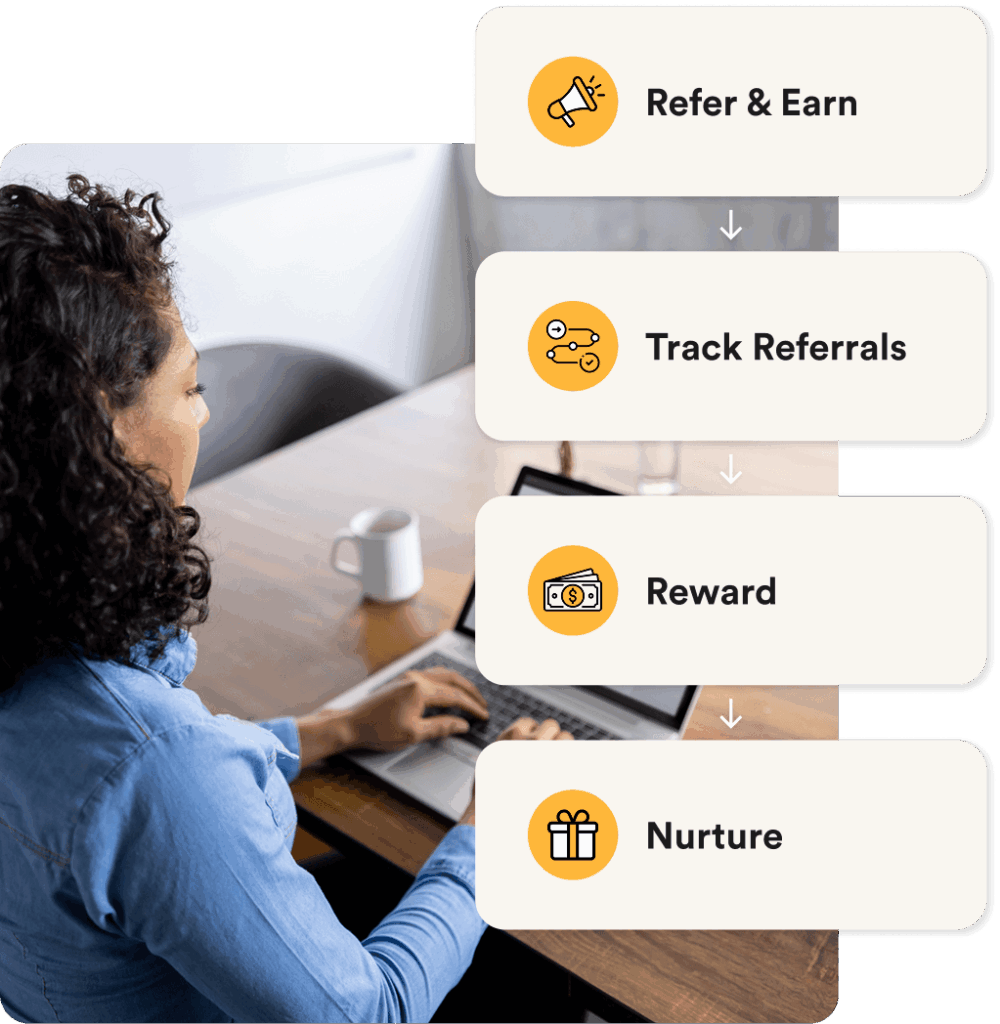
Referral programs should incentivize, reward, and track referrals.
Feedback & Online Reviews
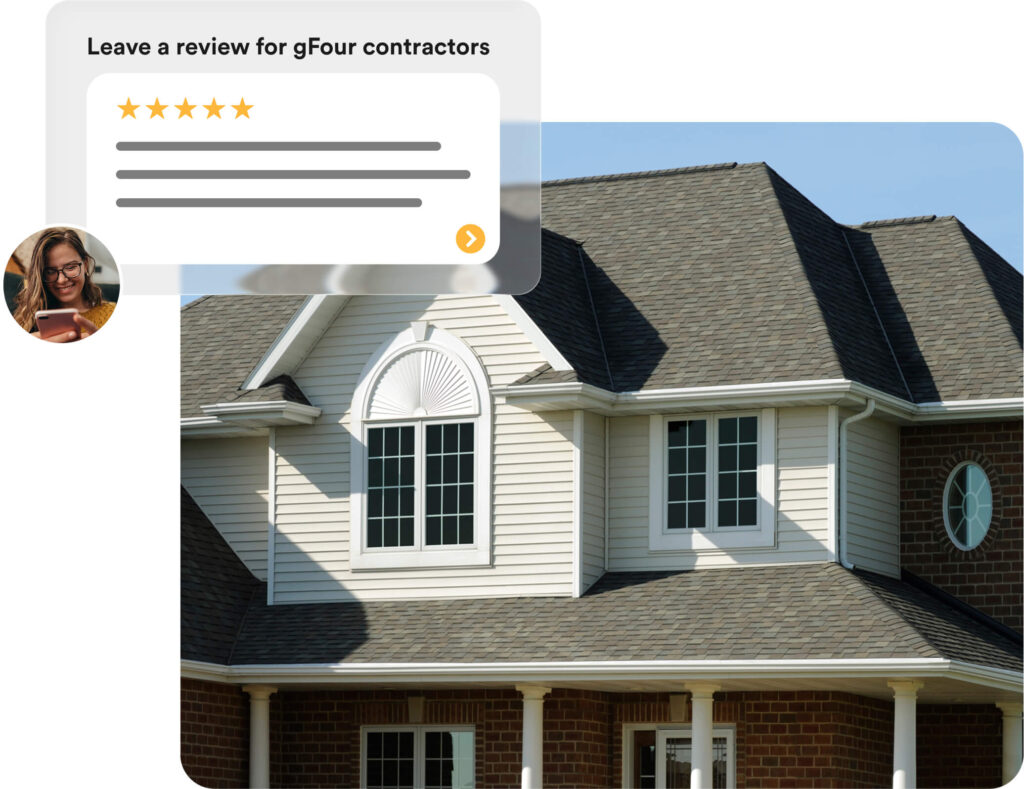
Online reviews are trust signals for prospective customers. Generating them is a critical part of relationship marketing.
Customer Nurturing
Good relationship marketing programs nurture customers to stay top-of-mind.
Across gFour’s analysis, the same barriers show up repeatedly:
No consistent follow-up system
Limited staff capacity
Missed referral and review asks
Inconsistent customer communication
Little or no post-project engagement
THE COST OF GOING QUIET
One internal benchmark estimates that a contractor may lose roughly 10% of a customer segment’s future engagement or referral potential for each month of silence, with the odds of reactivating that relationship falling sharply after several months.1
And when contractors were asked what they were trying to solve:
64%
of contractors who signed up for gFour mentioned automation, consistency, capacity, or a done-for-you model when signing up for the program1
71%
explicitly mentioned growing referrals or referral revenue1
53%
mentioned long-term nurture or staying top of mind1
Bottom Line
The opportunity is already in your database. The challenge is having a system that consistently turns those relationships into more referrals, repeat business, and reviews.
40x ROI in One Year
Tara Rescigno
DiGiorgi Roofing & Siding
The gFour System in Practice: Process & Payoff
The data points to a clear opportunity. Contractors have already earned trust with past customers, but capturing the full value of those relationships requires consistent follow-through.
A robust relationship marketing system shows up for contractors in three core components:
Referrals
Repeat Business
Reviews
This section analyzes the results a top-notch relationship marketing system can yield for contractors and the strategies implemented to get there: nurture, reactivation, and customer appreciation.
Referral Marketing
Tackling The Referral Gap
Timing is key here—referrals often happen well after the original job is complete.
91%
of happy customers say they’d refer a contractor they were satisfied with
vs
29%
of customers end up referring a contractor
gFour Proprietary Data1
44%
of customers who refer submit more than one referral over time
gFour Proprietary Data1
What This Means for You
A one-time referral ask at the end of the job is too early (and too short-lived) to capture most of the opportunity.
The bigger opportunity is staying remembered long enough to be referred when the right conversation finally happens.
The System
A structured referral program makes it easier to:
Keep the referral opportunity visible over time
Give customers a simple way to refer
Recognize and thank customers who advocate for the business
Track referrals and rewards
Scale with the business and run regardless of staff changes
The goal isn’t simply to ask for more referrals. It’s to make referring easy when the opportunity naturally occurs.
<2% Cost of Marketing
Justin Bartley
Next Door & Window
The Real Referral Reward
Referral activity builds over time.
Referral activity doesn’t end when the project does.
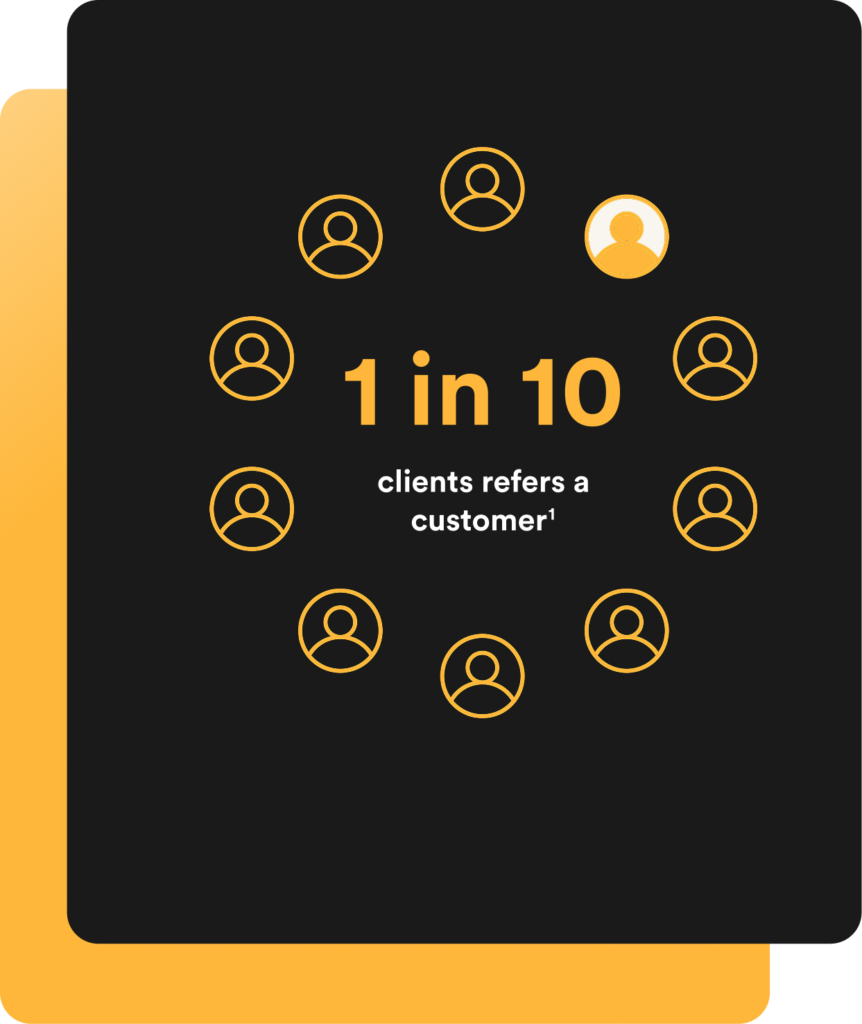
Across gFour clients, the median referral rate is 10.1%, meaning roughly 1 in every 10 clients refers a customer.1
Data Note These rates reflect referrals registered through gFour tracking. Referrals that arrive through phone calls, direct word of mouth, or other untracked paths are not included, so the measured rate should be treated as a floor rather than a complete estimate of referral activity.
Repeat Business
Return Customer Potential
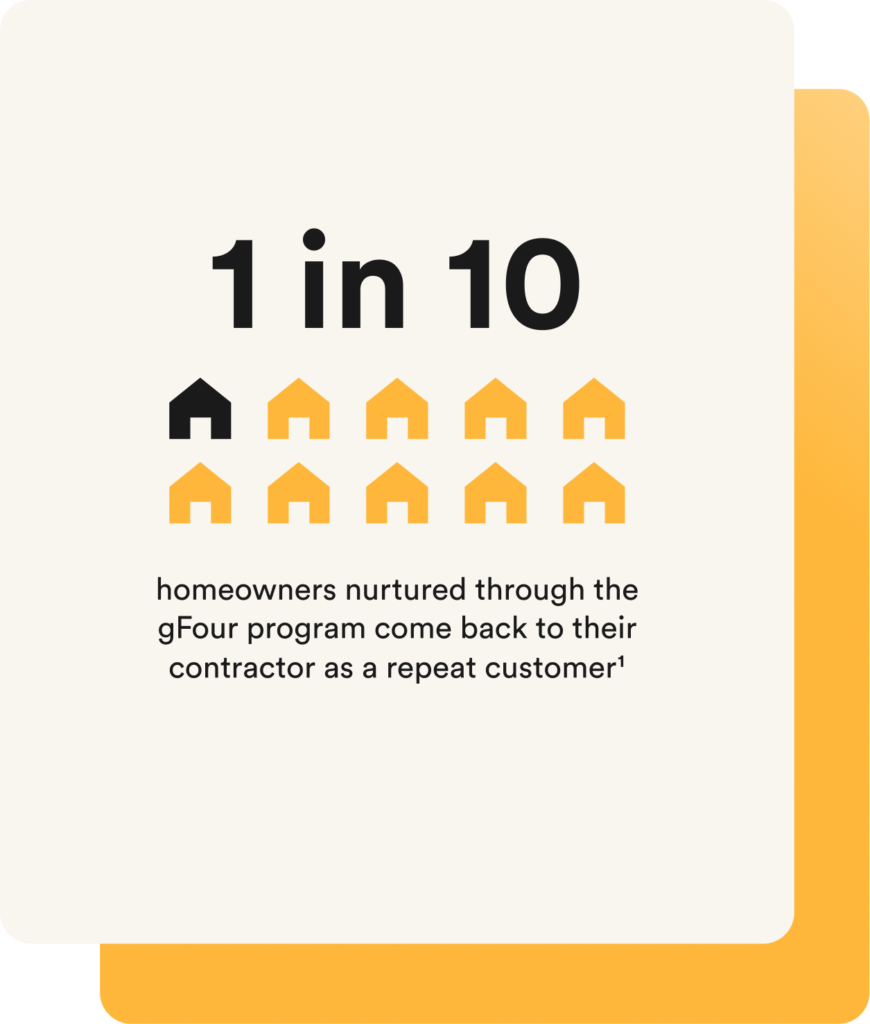
Across the gFour client database, the median repeat job rate is ~10%.1
Those are customers that our contractor could have lost touch with without a system in place—and those are just customers captured in the system. While the exact number may vary across subindustries, the number for contractors with repeat business potential is likely higher, because some customers chose to call the contractor directly rather than replying to emails.
Real Client Stories
What Does This Look Like in Revenue?
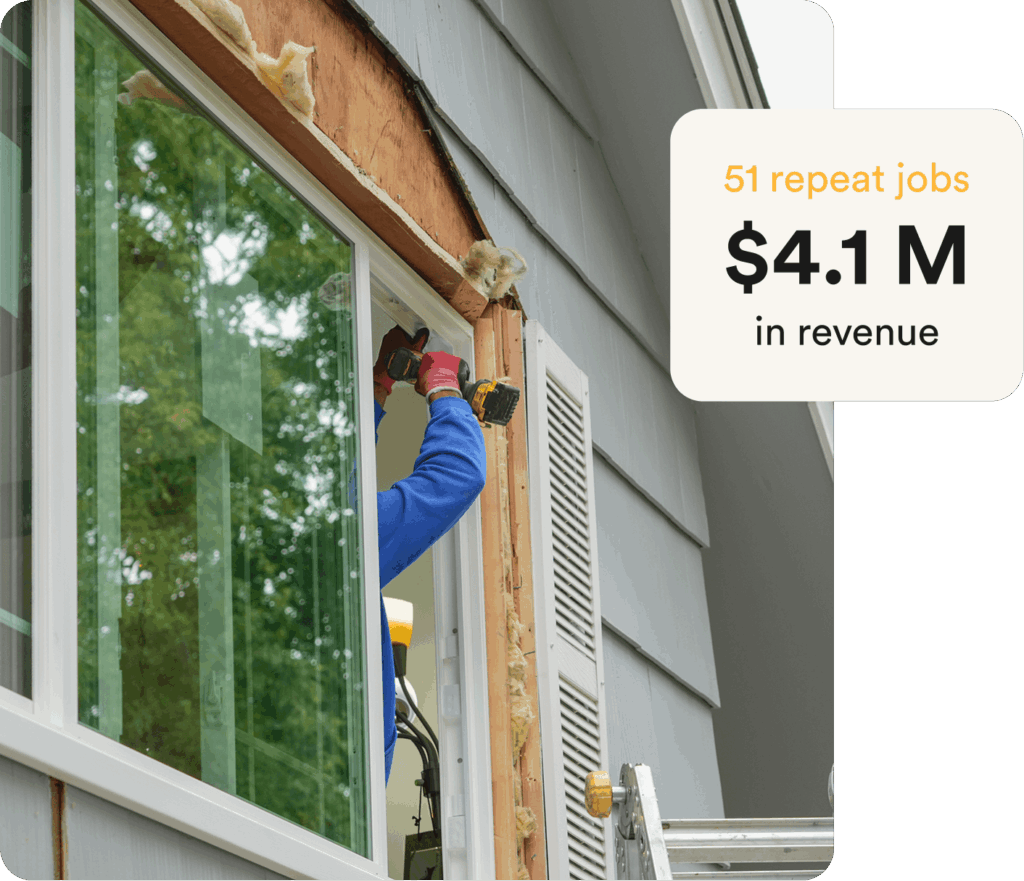
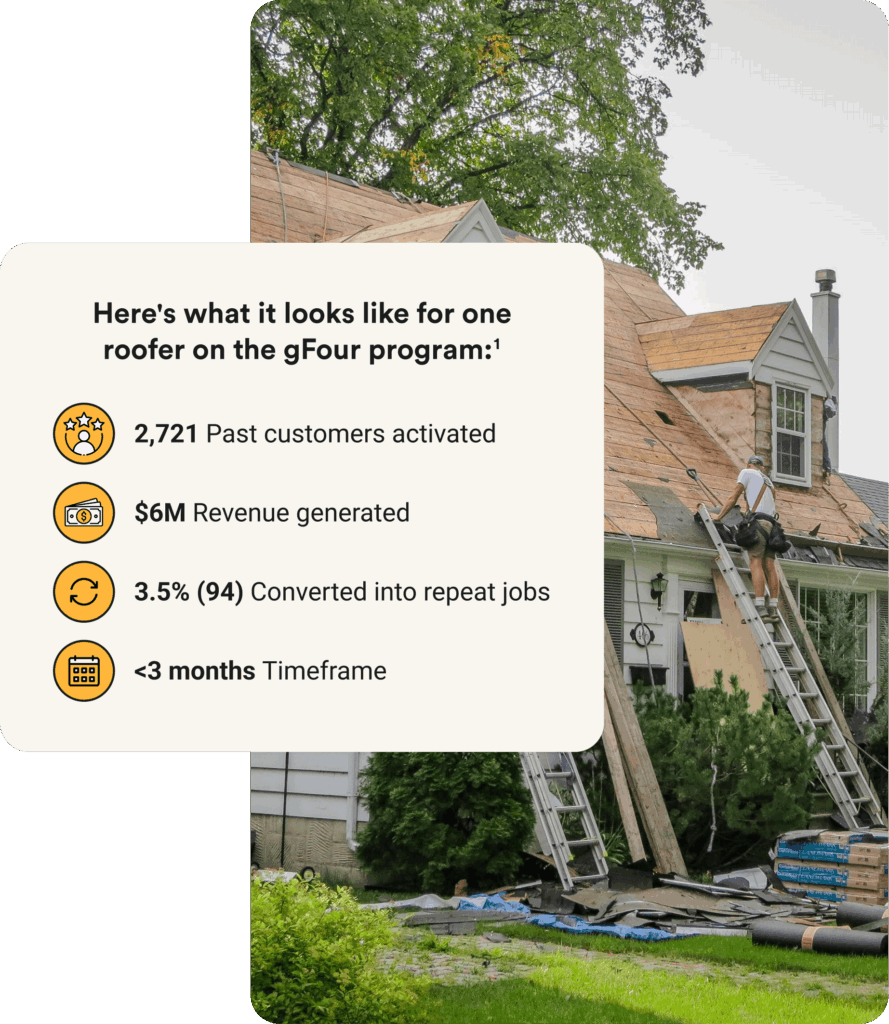
One gFour member, a window dealer out of Chicago, logged 51 repeat jobs in a single quarter worth $4.1 million in influenced revenue through the gFour program.1
THE SOLUTION
A long-term customer nurture system.
Strategically timed to make sure your customers never forget your name.
Repeat-business potential varies by subindustry — a bathroom remodeler and a full-exterior contractor won’t see identical repeat rates, simply because the work itself repeats on different cycles.
Phone Calls
Emails
Direct Mail
Reviews
Reputation Management In Practice
Great work is the foundation of a strong reputation. But great work alone doesn’t guarantee a steady flow of reviews.
50%
lift in review volume
after implementing a customer appreciation program
It’s not just review generation; gFour clients also have fewer negative reviews.
One exterior remodeler in the Midwest was able to remove 14/14 negative reviews after 1 year on the program.1
Real Client Examples1
+415 new reviews
since starting with gFour
+219 new reviews
since starting with gFour
The System That Drives Outcomes
Referrals, repeat business, consistent review generation, and lead reactivation don’t happen by accident. They’re real results that contractors can see when they implement a relationship marketing system.
Saying Thank-You
Reciprocity in Action
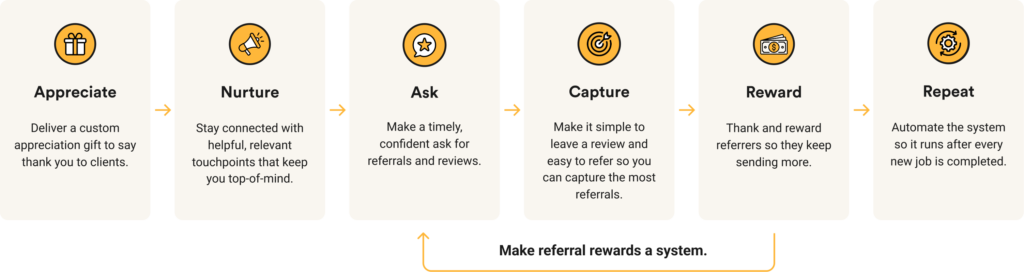
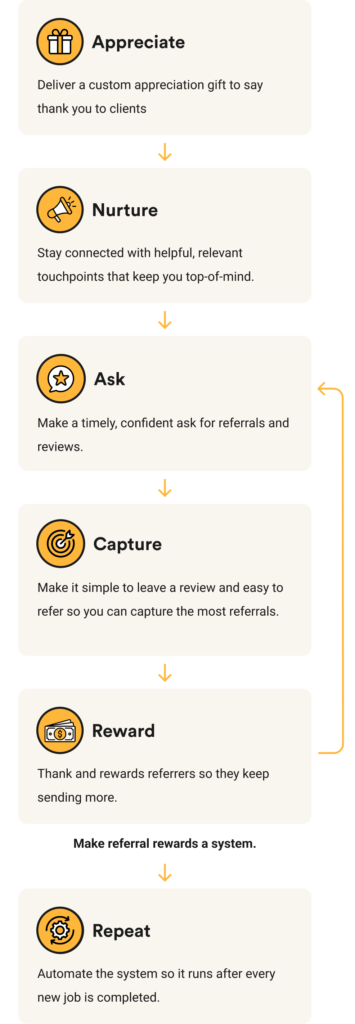
After every job a contractor completes, saying thank-you is critical. Not just because it’s the right thing to do, but also because it can help generate reviews, referrals, and repeat business.
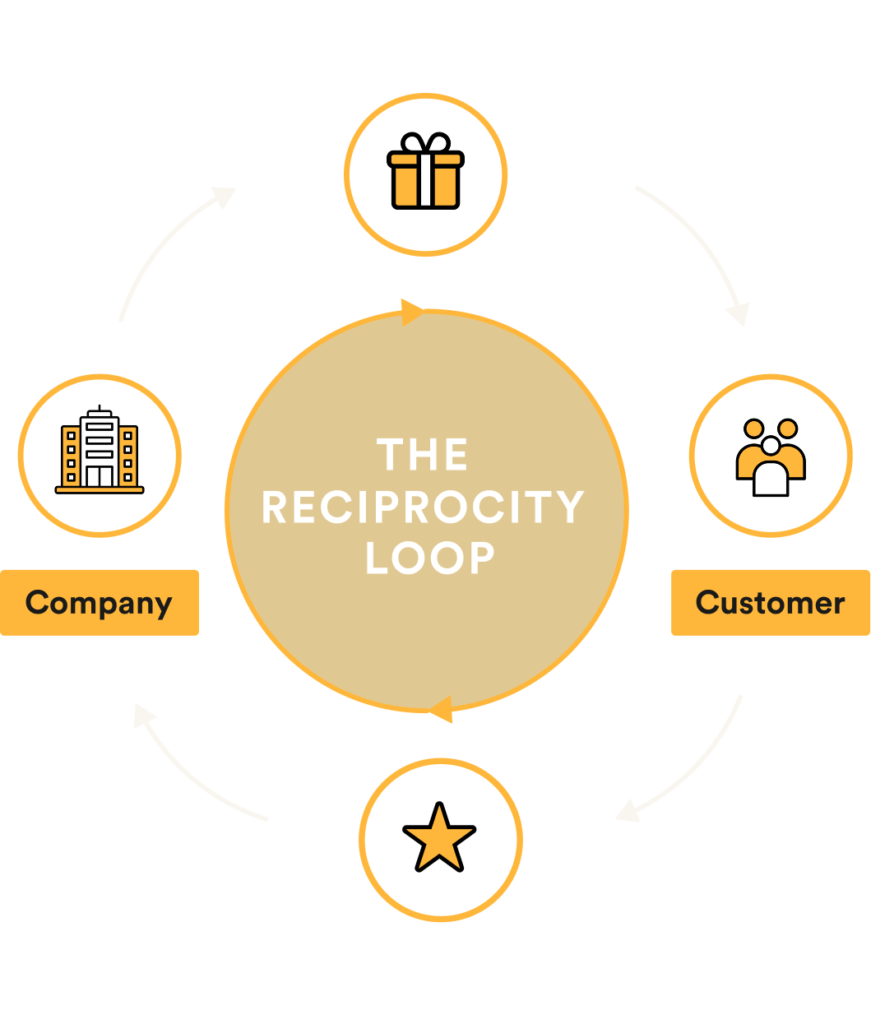
That’s the Law of Reciprocity in action. You give your customer a gift, appreciation, or a genuine thank you, and they’re more likely to reciprocate with reviews, referrals, and repeat business.
Every homeowner a contractor activates into the gFour program receives a thank-you gift directly from the contractor.
That small appreciation gift drives review volume and makes the business memorable.
gFour Highlight
The contractors who become gFour clients arrive with a strong reputation already in place, proving that the contractors choosing a relationship-marketing partner tend to already be doing good work and earning good reviews organically — they’re buying systematic follow-through to supercharge customer engagement, not a reputation rescue.1
4.9
median Google star rating across gFour clients
Reputation Management
Beyond A Job Well Done
Reputation management doesn’t stop once a contractor reaches a certain number of reviews.
The gFour program
Drives continued review generation
Offers tools for managing and responding to reviews
Provides a path for negative review removal
The goal is to maintain a reputation that continues to give future homeowners confidence in what they see.
Referral Rewards
Make Referring You Easy
A referral program has to do more than offer a reward.
To work consistently, someone has to:
Promote the program
Make it easy for customers to refer
Track referrals
Manage reward fulfillment
Follow up over time
Recognize and thank customers who advocate for the business
For gFour clients, those pieces are handled within the system.
The contractor’s main decision is simple: choose the referral reward amount.
Among gFour contractors, referral rewards typically range from $50 to $500, averaging around $125, with reward amounts generally scaled to the contractor’s average ticket.1
Nurture Campaigns
Stay Connected Long After the Job
Referrals and repeat jobs often happen months or even years after the original project is complete.
One follow-up isn’t enough to keep you top of mind that long. A strong nurture program stays in touch through multiple channels, including email, direct mail, phone calls, and text messaging.
You want your company to still be familiar when a customer needs another project or has someone to refer.
Email
Email nurtures are one of the best ways to keep in touch with homeowners after the job is completed. These campaigns keep your business top of mind for review requests, referrals, and when it’s time for homeowners to book the next job.
3.12%
Average click-through rate across gFour nurture emails.1
Three specific email types lead the program, with the highest click-through rate:1
“Welcome to the Family,”
“Your Opinion Matters,”
“Did You Receive Your Gifts?”
A pattern that reinforces the idea that personal, human-toned communication consistently outperforms transactional messaging.
Email Click-Through Rate Benchmark1
Direct Mail
Direct mail gives you another way to stay in front of customers without competing for attention in an inbox or social feed.
Direct Mail's Impact
Bill Burkhardt Jr.
Four Seasons Kanga Roof
84%
of marketers say direct mail delivers their highest ROI of any channel they run.18
64%
of consumers say a piece of direct mail inspired them to take action.19
And within the gFour program, the results are even more concrete.1
LEAD REHASH
Another Chance to Land the Clients You Already Paid For
Rehashing unsold leads to convert them into new jobs is one of the fastest, highest-ROI campaigns a contractor can run. You already paid for these leads, so there’s no new acquisition cost to recover before you start seeing profit.
gFour’s rehash program:
Five-email sequence
90 days, fully automated
Targets previously unsold leads
Average conversion rate
3.09%
Maximum across gFour clients1
18.75%
Here's what it actually looks like, from real contractor data:
898 Unsold leads entered into rehash campaign $6.25 Cost per lead 11% converted into sales $10K Average ticket cost
Total Cost
$5,642
Revenue Generated
$1.0M
within 3.5 months
Total campaign cost equaled just 0.6% of revenue generated.1
DATABASE REACTIVATION
Turn Past Customers Into Repeat Jobs and Referrals
Reactivating your past customer list to generate repeat jobs and referrals is one of the fastest, lowest-cost ways to grow revenue. These are homeowners who already know your work and already trust you.
Past customers are enrolled in a long-term nurture sequence:
Direct mail piece
Monthly newsletter
Referral rewards & raffles
Average conversion rate over 12 months1
2–10%
+90% on Repeats & Referrals
Eric Peschke
Zintex Remodeling Group
Program Payoff
Revenue & Marketing Efficiency
You can manage pieces of the relationship marketing separately and ad-hoc and generate some results.
The bigger payoff comes when they operate as one coordinated system, with every customer touchpoint working toward the same goal: generating more referrals, repeat business, reviews, and long-term customer value.
That’s where relationship marketing shifts from random acts of customer marketing into an ongoing growth engine.
The Value Builds Over Time.
The system is designed to keep working long after the first project is complete.
A review generated today can influence a future homeowner. A past customer may not need another project for years. A referral may happen months after the original job. An unsold lead may reengage long after the first conversation.
The value comes from staying connected long enough for those opportunities to show up.
15.6x
Median return on marketing investment for gFour clients active 10+ months
Results vary widely across clients, with some producing exceptionally high returns. For that reason, the median provides a more representative view of what an established gFour client typically experiences.
$551.8M+
Total incremental gross revenue influenced across active gFour Members
That revenue is concentrated among longer-tenured client relationships, reinforcing a consistent theme throughout the data: relationship marketing is best evaluated over the customer lifecycle, not as a short-term campaign.
Cumulative Gross ROI, By Tenure Band
83.7% of All Revenue Comes From Clients
Tenured 24+ Months
$551.8M in total influenced revenue. Nearly all of it from relationships that lasted.
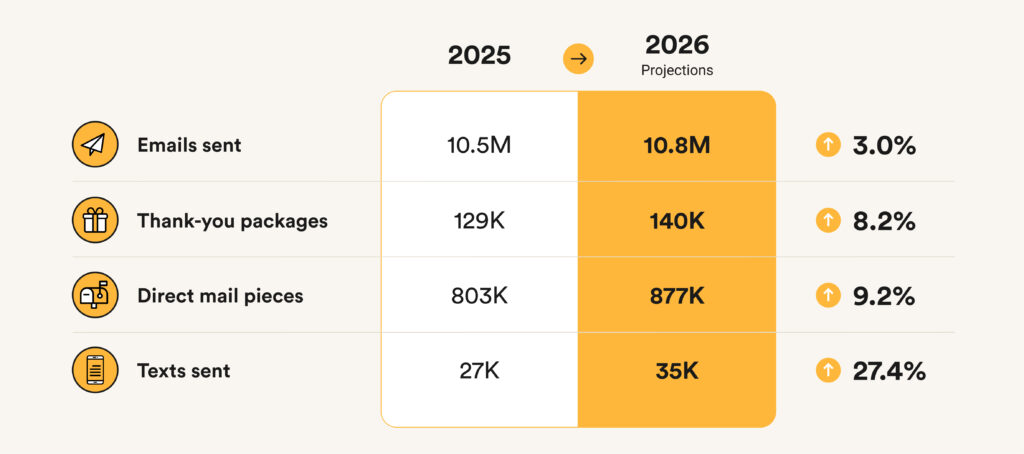
gFour at a Glance: Scale Behind the System
The results in this report come from a relationship marketing system being operated at scale across hundreds of contractor businesses for 17 years.
These activity numbers aren’t outcomes on their own. They show the scale behind the benchmarks and the volume of customer relationships being managed through the system.
How to Apply This
Your Action Plan
You don’t need to stop investing in new-customer acquisition to get more from the relationships you already have.
What matters is having a consistent way to manage what happens after a customer enters your business, so appreciation, reviews, referrals, and follow-up don’t get dropped when the team gets busy.
Start with the basics.
Earn the Relationship
Make sure the customer experience is worth talking about.
Review the full customer journey from sale through project completion
Identify moments where communication or service commonly breaks down
Resolve outstanding issues before asking for reviews or referrals
Make post-project follow-up part of the customer experience—not an afterthought
Make Appreciation Systematic
Don’t let the relationship end with the final invoice.
Create a consistent post-job thank-you process
Make the communication personal rather than transactional
Consider a thoughtful appreciation touch or gift
Follow up quickly while the experience is still fresh
$3M to $35M Mindset Shift
Ryan Keene
MODE Renovations
Turn Customer Satisfaction Into Visible Proof
Homeowners are reading reviews closely, but they’re also becoming more skeptical of what they see.
Build a consistent, policy-compliant review-request process
Make requests easy to complete and track
Prioritize a steady flow of recent, specific reviews
Respond to both positive and negative reviews
Track review volume, recency, rating, and response rate—not star rating alone
The goal isn’t simply to collect more stars. It’s to build a credible body of evidence that gives future homeowners confidence in choosing you.
Make Referrals a Program, Not a One-Time Ask
A single referral ask leaves much of the opportunity untouched; a referral system is a must for capturing past-customer revenue.
Create a clearly defined referral program
Decide how customers will submit and track referrals
Determine whether an incentive fits your business and average ticket
Remind customers about the program throughout the relationship
Recognize and thank customers when they refer
Make referring easy—and stay remembered long enough for the opportunity to occur.
Stay Connected Long After the Job Is Done
This is where relationship marketing becomes a system rather than a campaign.
Build a year-round customer communication calendar
Use a mix of appropriate channels—email, mail, text, phone, and customer appreciation
Give customers useful or interesting reasons to hear from you
Introduce additional products and services when relevant
Continue communicating well beyond the first year
The relationship shouldn’t end after the job does. That’s where a system works
Measure It—and Give Someone Ownership
A relationship-marketing system only works if someone is responsible for keeping it running.
Track repeat, referral, and cold leads separately
Compare close rates and revenue by lead source
Measure repeat and referred revenue over the full customer lifecycle
Assign clear ownership for every post-sale touchpoint
Calculate the actual cost of running the system internally
Decide deliberately what to build in-house and what to outsource
This doesn’t have to mean a larger marketing budget. Reallocate a portion of existing acquisition spend toward nurturing customers you’ve already paid to acquire.
Getting Started?
Ask Yourself These 4 Questions
What happens after we finish the job? Is there a defined customer journey—or does communication stop?
Can we measure repeat and referral business? If not, fix the tracking first.
When did our past customers last hear from us? Look for large segments that have gone quiet.
Who owns the relationship after the sale? If the answer is “everyone,” it often means no one does.
Bottom Line
Relationship marketing isn’t another campaign to add to the calendar. It’s infrastructure for turning one customer into a longer-lasting source of reputation, referrals, repeat business, and future revenue.
Hear More Client Stories
Want to see how we can do this for you?
SCHEDULE A DEMO ↓
Sources
Sources are listed in the order each is first cited in this report. Source 1 aggregates gFour’s internal program, CRM, and client data (see Methods for how each underlying dataset was built and its caveats); remaining sources are third-party research, industry associations, and published market data.